Thursday, October 3, 2013

Laguna View Family Dental, Elk Grove Ca


MEET OUR DOCTOR


LEO W. TOWNSEND, DDS

Leo W. Townsend, D.D.S., is originally from Southern California and graduated from the University of California at Berkeley. He has been practicing dentistry since 1989 after graduating from Meharry Medical College in Nashville, Tennessee and completing a GPR residency at the University of Rochester in Rochester, New York. He continually updates his dental techniques through classes and hands-on seminars. The doctor and his family have lived here in the Elk Grove / Laguna area for over 18 years.

CONTACT INFO
7915 Laguna Blvd., Suite 120
Elk Grove, CA 95758
Phone: (916) 683-1335
Fax: (916) 683- 4506
E-mail: info@lagunaview.com

OFFICE HOURS
Monday & Tuesday 9 a.m. - 6 p.m.
Wed. & Thursday: 8 a.m. - 5 p.m.

MEET OUR STAFF


Our office is committed to providing you with the highest quality dental care in the most gentle and efficient way. Located in the Laguna Creek area of Elk Grove, the office is near all major roadways, making locating us very easy and convenient to you. With a highly trained and experienced staff, Dr. Townsend will be able to tend to the dental needs of you and your family.
 Threca Wilson, RDH

Threca has been a hygienist for 17 years. She graduated from Sacramento City College Hygiene Program in 1996. Threca enjoys spending time with her husband and family. She enjoys playing golf, camping, fishing, and traveling. She looks forward to meeting you soon.


 Kimberly Arbuckle, Office Manager

Kimberly Arbuckle has been our Office Manager for over 5 years and has been a Registered Dental Assistant for the past 20 years.
She has a great sense of humor and  loves to make people feel at ease in the dental chair, and will assist you in all your dental needs. Kimberly is also very knowledgeable in insurance billing and will be able to help you maximize your insurance.
She is a wonderful mother of 2 grown girls. She enjoys cooking and spending time with her friends and  family. She looks forward to meeting you soon.


 Tina Ochoa, Scheduling Coordinator

Tina Ochoa has been our Scheduling Coordinator for 7 years. She has over 30 years experience working in the administrative doctor’s offices. She enjoys making sure all of our patients scheduling needs are met.
 Tina is bilingual in Spanish. She has been married for 34 years and has 2 adult sons. She enjoys reading and spending time with her family.
When calling or visiting our office Tina will be there to assist you promptly and professionally.


Erin Beatie, R.D.A.

Erin has worked in the medical field since 2003. She went back to school at Carrington College in 2010 to pursue a career in the dental field.
Erin enjoys spending time with her boyfriend and her 2 dogs. She enjoys riding quads, going to sprint car races, playing golf, and traveling. She is very active in the community and does a lot of volunteer work. She looks forward to meeting you.

Thursday, September 26, 2013

Cavity Detection With DIAGNOdent


DIAGNOdent is an instrument used in our office that uses lasers to detect any signs of tooth decay. The benefit of such a device is that it is able to identify signs of tooth decay earlier than many other diagnostic techniques. This is a positive step in the treatment of teeth, as the sooner signs of tooth decay are found the better prepared we are to deal with them.  Because the decay is detected earlier, the number of dental procedures - and hence, the cost - can often be reduced. It's a great way to keep little problems from becoming big problems.

In the past tooth decay predominated in between teeth. With the widespread use of fluoride, the very nature of tooth decay has changed. The outer surfaces of teeth are strengthened and more resistant.

Today most tooth decay starts in the hard-to-see valleys and canyon-like anatomy of the tooth surface. Pit and valley cavities are traditionally the most difficult to detect using x-rays due to the direction the images are taken from. Images are taken from the side of the tooth, which essentially hides the cavity from the dentists view. An almost undetectable area of decay can aggressively penetrate inward towards the soft surfaces of the tooth and literally destroy the tooth from the inside out. This can happen before a cavity is even visible to the naked eye.

X-rays and DIAGNOdent complement each other. X-rays are good at finding cavities in between teeth and on the roots. DIAGNOdent is good at finding cavities on the biting surfaces of the teeth.

DIAGNOdent works by way of a laser which is calibrated to each individuals teeth.
The light of the laser is shone onto the teeth and a numerical reading appears on the unit. Teeth that are of good quality will show little to no reading (0 to 24 in our office), but those that are showing signs of decay will show a reading of 25 or higher. The DIAGNOdent measures laser fluorescence within the tooth structure. As the incident laser light is propagated into the site, two-way handpiece optics allows the unit to simultaneously quantify the reflected laser light energy. At the specific wavelength that the DIAGNOdent laser operates, clean healthy tooth structure exhibits little or no fluorescence, resulting in very low scale readings on the display. However, carious tooth structure will exhibit fluorescence, proportionate to the degree of caries, resulting in elevated scale readings on the display. Studies have shown the unit is equally accurate in both primary and permanent teeth.

DIAGNOdent is completely painless  and takes only a few minutes. It's energy level similar to that of a laser pointer, the laser beam is harmless to surrounding tissues. The DIAGNOdent laser is used as a routine part of exams and there is no additional fee associated with the scan.


Monday, September 16, 2013

Digital X-rays


Dentists consider x-rays one of the most helpful tools in helping patients maintain good oral health. X-rays help dentists diagnose  common disorders such as cavities, periodontal disease and infections, and some of the more uncommon problems, such as cysts, abscesses and tumors.

X-rays can also allow your dentist to determine whether a child's permanent teeth are erupting properly. In general, children need x-rays more often than adults because their mouths grow and change rapidly, and they are more susceptible to tooth decay than adults

An advance in x-ray technology is digital x-rays which uses sensors that feed the images to a computer.The digital x-ray system is more sensitive than the traditional dental x-ray film systems, so exposure to x-rays is cut by as much as 90 percent.

You are exposed to many sources of radiation every day, from the sun,  your home appliances etc. Radiation can damage the body's tissues and cells and can lead to the development of cancer, but fortunately, the radiation to which you are exposed during the taking of digital x-rays is extremely small.

Without the ability to see inside a tooth and beneath the gums, some disease would go undetected and more teeth would be lost because needed treatment wasn't started in time. If dental problems are found and treated early, dental care is more comfortable and affordable. Digital x-rays are not without risk, but the risk is minuscule compared with the huge diagnostic benefit of keeping your natural teeth healthy and disease free.

Wednesday, September 11, 2013

Pain Free Dental Injections


Let us introduce you to the DentalVibe


The DentalVibe is an instrument we use in our office to eliminate/reduce pain from dental injection. It somewhat looks and sounds like an electric toothbrush.

It is placed at the injection site.


The DentalVibe transmits vibration at the site. This sensation reaches the brain and blocks most if not all of the discomfort associated with the injection.


We have had very positive feedback from our patients.


Tuesday, August 20, 2013

Dental Phobia

How many times have you heard someone say "I hate going the dentist"? People who are very fearful of dental care often experience a "cycle of avoidance", in which they avoid dental care until they experience a dental emergency requiring invasive treatment, which can reinforce their fear of dentistry. 75% of US adults experience some degree of dental fear, from mild to severe. Approximately 5 to 10% of US adults are considered to experience dental phobia to the degree they avoid dental care at all cost. Women tend to report more dental fear then men and younger people tend to report being more dentally fearful than older individuals. There are two categories of dental fear direct and indirect.

Direct experience is the most common. Most people will say that their dental fear began after they experienced a painful or difficult treatment.

Indirect experiences are when a person hears of some else's traumatic experiences and/or negativity towards dentistry. A person may also preceive a sense of helplessness and/or loss of control. Mass media and cartoons may also contribute to dental fears. Fear caused by indirect experiences become a self-fulfilling prophecy "you believe it therefore it is".

Signs of dental phobia:
     Trouble sleeping the night before the dental appointment.
     Feelings of nervousness that escalate while in the dental office waiting room.
     Crying or feeling physically ill at the thought of visiting the dentist.
     Intense uneasiness at the thought of, or actually when, objects are placed in your mouth during 
     dental treatment or suddenly feeling like it is difficult to breath.

To help our patients overcome either types of these fears:
     We take intraoral photos to help explain the need for treatment.
     Explain exactly what the procedure is and how it will be done.
     Make sure to administer local anesthetic slowly and pain free with the use of the DentalVibe.
     Provide dark glasses and music of your choice.
    Allow our patient to stop any time during a procedure to take a break or disuss any concerns.

Thursday, August 1, 2013

Toothbrushes

Various excavation sites over the world have uncovered chew sticks, tree twigs, bird feathers, animal bones and porcupine quills used to clean teeth.
A recent archaeological dig has found that the earliest use of toothbrushes may have occurred in India and Africa. It was discovered that a bristle toothbrush had been used there as early as 1600 B.C
The first bristle toothbrush found was in China and used hog bristle.  The bristle toothbrush spread to Europe by travelers. Many mass-produced toothbrushes, made with horse or boar bristle, were imported to England from China until the mid-20th century.
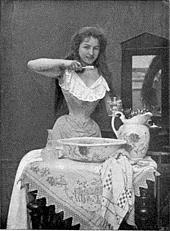
A photo from 1899 showing the use of a toothbrush.
By 1840 toothbrushes were being mass-produced in England, France, Germany, and Japan. Pig bristle was used for cheaper toothbrushes, and badger hair for the more expensive ones.
Mass production in the United States only started in 1885. The rather advanced design had a bone handle with holes bored into it for boar hair bristles.
Animal bristles were replaced by synthetic fibers, usually nylon, in 1938.
The first electric toothbrush was invented in Switzerland in 1954.

Thursday, July 11, 2013

Oral health linked to your overall health

Your oral health is more important than you might realize. Get the facts about how the health of your mouth, teeth and gums can affect your general health.

Did you know that your oral health can offer clues about your overall health — or that problems in your mouth can affect the rest of your body?  Understand the intimate connection between oral health and overall health and what you can do to protect yourself.

What's the connection between oral health and overall health?
Like many areas of the body, your mouth is teeming with bacteria — most of them harmless.  Normally the body's natural defenses and good oral health care, such as daily brushing and flossing, can keep these bacteria under control. However, without proper oral hygiene, bacteria can reach levels that might lead to oral infections, such as tooth decay and gum disease.

In addition, certain medications — such as decongestants, antihistamines, painkillers and diuretics — can reduce saliva flow. Saliva washes away food and neutralizes acids produced by bacteria in the mouth, helping to protect you from microbial invasion or overgrowth that might lead to disease.

Studies also suggest that oral bacteria and the inflammation associated with periodontitis — a severe form of gum disease — might play a role in some diseases.  In addition, certain diseases, such as diabetes and HIV/AIDS, can lower the body's resistance to infection, making oral health problems more severe.
What conditions may be linked to oral health?
Your oral health might affect, be affected by, or contribute to various diseases and conditions, including:
Endocarditis. Endocarditis is an infection of the inner lining of your heart (endocardium). Endocarditis typically occurs when bacteria or other germs from another part of your body, such as your mouth, spread through your bloodstream and attach to damaged areas in your heart.  Cardiovascular disease. Some research suggests that heart disease, clogged arteries and stroke might be linked to the inflammation and infections that oral bacteria can cause.  Pregnancy and birth. Periodontitis has been linked to premature birth and low birth weight.  Diabetes. Diabetes reduces the body's resistance to infection — putting the gums at risk. Gum disease appears to be more frequent and severe among people who have diabetes. Research shows that people who have gum disease have a harder time controlling their blood sugar levels.  HIV/AIDS. Oral problems, such as painful mucosal lesions, are common in people who have HIV/AIDS.  Osteoporosis. Osteoporosis — which causes bones to become weak and brittle — might be linked with periodontal bone loss and tooth loss.  
How can I protect my oral health?
To protect your oral health, practice good oral hygiene every day. For example:
Brush your teeth at least twice a day. Floss daily. Eat a healthy diet and limit between-meal snacks. Replace your toothbrush every three to four months or sooner if bristles are frayed. Schedule regular dental checkups.  Also, contact your dentist as soon as an oral health problem arises.  Remember, taking care of your oral health is an investment in your overall health.